Profits from prisoners

Over the nine months that Dominic “Kobeany” Deere was incarcerated at the Kalamazoo County Jail in 2023 and 2024, he estimates he and his family spent $3,100 in phone calls and $4,600 in video calls.
This is the only way incarcerated people can see their families. Nearly all in-person visits have been prohibited since 2013, replaced with virtual contact through phones or jail tablet devices.
“(You’re) spending a lot of money in the day trying to keep in contact with your family, especially if they’re used to you being (at home),” said Deere, who was raised in Kalamazoo and is both a father himself and a father figure to nieces and nephews.

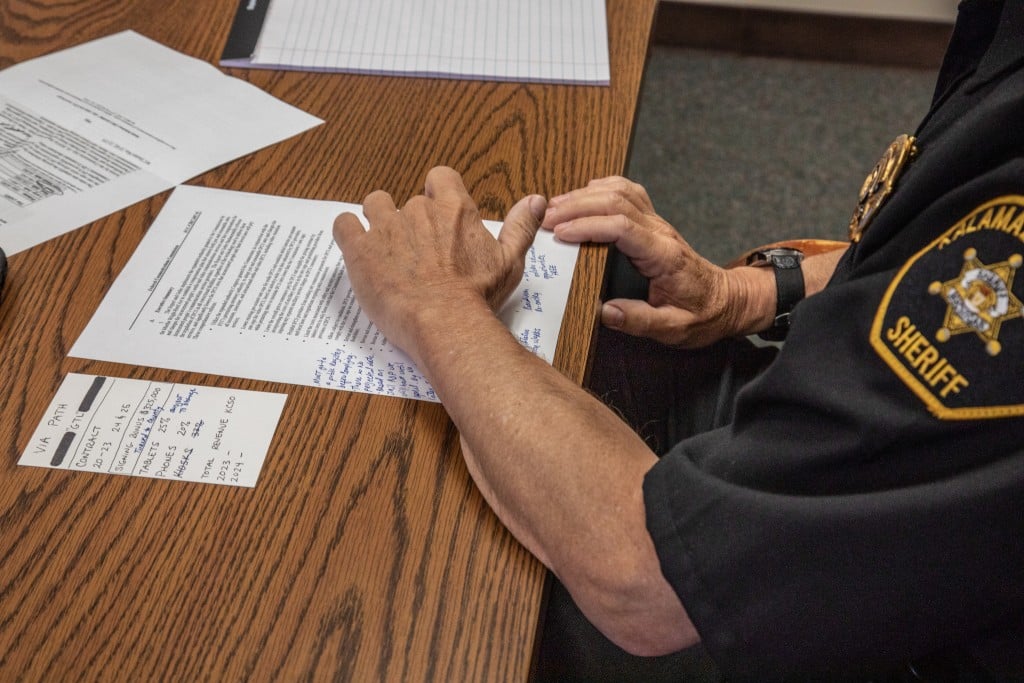
The telecommunications services are provided by a private corporation under a 2020 contract, approved by the Kalamazoo County Board of Commissioners and signed by the county administrator. Every amendment to the contract has been approved by the commission and signed by the commission chair, according to County Public Information Officer Taylor Koopman. As part of the deal, the majority of the fees, paid by jailed people, go to the county’s coffers – not to pay the service provider. The winning contract bidder, ViaPath, previously called Global Tel*Link, or GTL, paid the county a $325,000 signing bonus as well.
All of the revenue, as well as the bonus, is sent to the county’s general fund, not the sheriff’s department or jail, said Kalamazoo County Sheriff Richard Fuller.
Similar contracts are being scrutinized in St. Claire and Genesee county lawsuits that allege a “quid pro quo kickback scheme” overseen by the same prison phone company that Kalamazoo County signed with.
NowKalamazoo obtained Kalamazoo County’s contracts and related communication from the Civil Rights Corps, a national nonprofit that challenges alleged injustices in the U.S. legal system. The documents, as well as additional details, were confirmed by Kalamazoo County officials. The Civil Rights Corps team is also involved in the lawsuits against St. Clair and Genesee counties.
ViaPath would not agree to an interview for this story, but the company’s communications consultant, Kelsey Duckett, emailed the following statement on behalf of “a company spokesperson”:
“At ViaPath Technologies, we prioritize transparency and compliance in our partnership with county jails, including Kalamazoo County. The decision to select our services is made through a public Request for Proposals (RFP) process, which allows for competitive bids to ensure that the best options are available to meet the community’s needs. Our commitment is to enhance communication for incarcerated individuals and their families while supporting the counties we serve. We believe that our technology can complement existing visitation methods, and we work closely with county officials to develop solutions that benefit all stakeholders involved.”
We asked Fuller if incarcerated people have a chance to weigh in on the selection of the jail’s communications services provider, being the ones who will use the service. He did not respond.
Aside from the high-profit fees, there are concerns voiced by incarcerated people, social workers, jail reform advocates, and referenced in the lawsuits, that the equipment is neither easily accessible nor reliable as a replacement for in-person visits.
Calvin Ruff, a licensed social worker and therapist for the Kalamazoo mental health clinic Synergy Health Center, has experience working with incarcerated individuals. He said the calls are not a replacement for the positive impacts – for the person incarcerated, for a community of incarcerated people, and for society when that person is released – of face-to-face contact or physical interaction with loved ones.
Personal contact is “something that generates a sense of hope, it generates a sense of normativeness,” Ruff said. “If we are really thinking about rehabilitating people and not just punishing people, I think in-person visits are an incentive that can be beneficial to people’s overall rehabilitation.”
National correctional groups have also acknowledged that video calls cannot replace in-person visits, and that jails and prisons should continue to provide opportunities for families to visit face-to-face. The American Correctional Association, which claims to be the country’s oldest prison industry trade association and an accreditation organization, has issued policy guidance that new technologies like video calls should be used to supplement traditional in-person visitation, not as a substitute for it.
We asked ViaPath if the company supports in-person visitation for incarcerated people and their families, or if part of their business plan is to eliminate this option. To that, a spokesperson wrote, “ViaPath Technologies defers to facilities to establish policies related to in-person visitation. In addition to video visitation solutions, ViaPath provides solutions to schedule in-person visitation for facilities.” Viapath provides scheduling systems for in-person visitation, according to this spokesperson.
When asked how much this service costs and whether it requires payment from incarcerated people, ViaPath declined to answer: “ViaPath Technologies provides systems that facilitate the scheduling of in-person visits. However, the specific features and procedures are determined by each individual customer.”
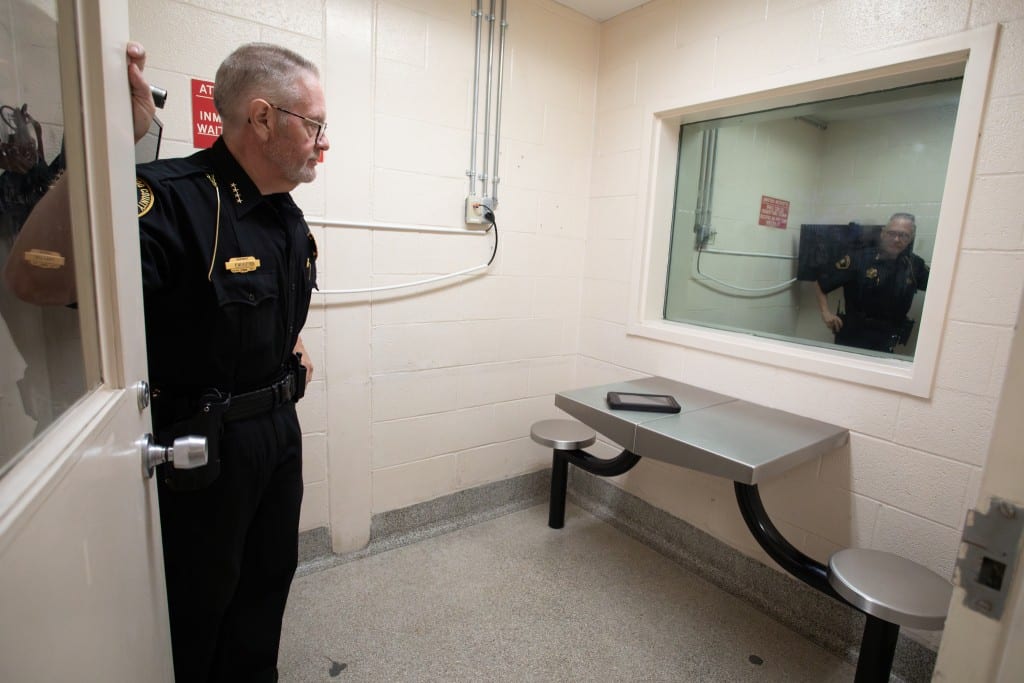
Fuller said previous in-person visitations at the Kalamazoo County jail were always separated by a glass divider, where jailed people and their visitors could see each other but not touch each other. “That was always a safety issue,” Fuller said. “Because for inmates to visit in the past, we had to take them out of whatever cell they’re in, move them through the facility to this visitation room, (and) put them in there with six other people.” But it didn’t require families to pay to see their loved ones. Fuller added that the tablets were part of an effort to expand visitation services to more people, as the former method was more limiting.
For Deere and other incarcerated people and their families, the problem is that their only option to see their loved ones often comes at a cost they can’t afford. The Federal Communications Commission (FCC) has tried to rein in these costs by capping fees that far exceed the actual expense of providing the service and instead serve to generate profit for telecom companies and the counties that contract with them. But strong lobbying efforts have repeatedly blocked the FCC’s attempts at meaningful reform.
How – and why – people held in the Kalamazoo County Jail pay so much
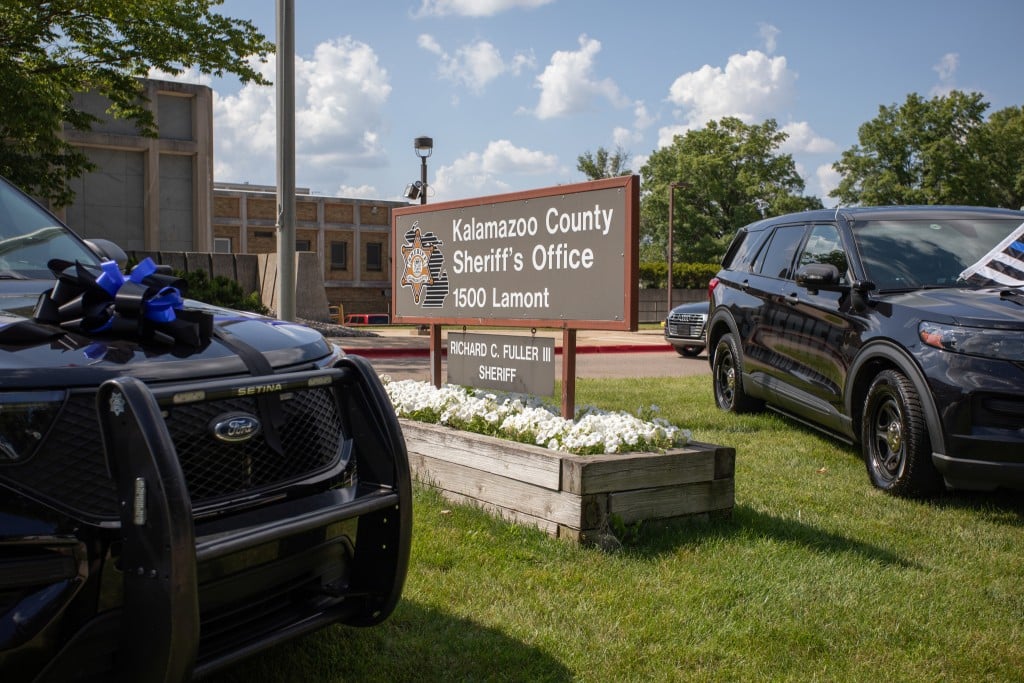
When people jailed in Kalamazoo County pay to communicate with the outside world, it costs $0.18 a minute for each phone call. They pay $0.25 for video calls and written messages, with an added fee of $0.50 for any photo attachments sent or received. According to the terms of the contract the county commission approved with the prison telecommunications firm Global Tel*Link, or GTL, now rebranded ViaPath, there’s a difference between telephone services and tablet services. The latter includes voice and video communication via the tablet. While the cost for non-video communication via the tablet is the same as a regular telephone call–$0.18–there is a difference in how much the county and ViaPath are compensated depending on the type of call.
ViaPath pays the county a commission of 80% of the phone call fees and 25% of communication via tablets but only if at least 80% of people in the jail have “reasonable access to the tablets,” according to the contract. ViaPath pays Kalamazoo County these commissions every month.
There are still outstanding questions about this contract in practice, such as the bare cost of providing telecommunications services to the Kalamazoo County Jail, whether ViaPath or the county collects the fees and then distributes to the other their cut, and which arm of the county collects the funds.
Koopman, the county’s Public Information Officer, said “the agreement with ViaPath is administered directly by the Kalamazoo County Sheriff’s Office, and they are the only office that can speak to how fees are calculated and collected, including the details of the commission.”
Fuller did not respond to these follow-up questions, although he previously said all of the funds go to the general operating fund, not to the Sheriff’s Office.
“The Administrator’s Office is not directly involved in the management of this contract. The Board of Commissioners approved the agreement, but all day-to-day oversight, reconciliation, and reporting are handled by the Sheriff’s Office finance team,” Koopman wrote in response to a question about countywide oversight of the funds if collected and managed separately by the Sheriff’s Office. Koopman again directed queries to the Sheriff’s Office, “as they are best positioned to address these details.”
We also asked ViaPath what the bare minimum cost is to provide phone and video services to a jail the size of Kalamazoo County’s. The company declined to answer. As for how the rates are determined for each jail, ViaPath wrote, “Rates for contracts are established through competitive procurement processes that take into account the requirements set forth by the procuring agency.”
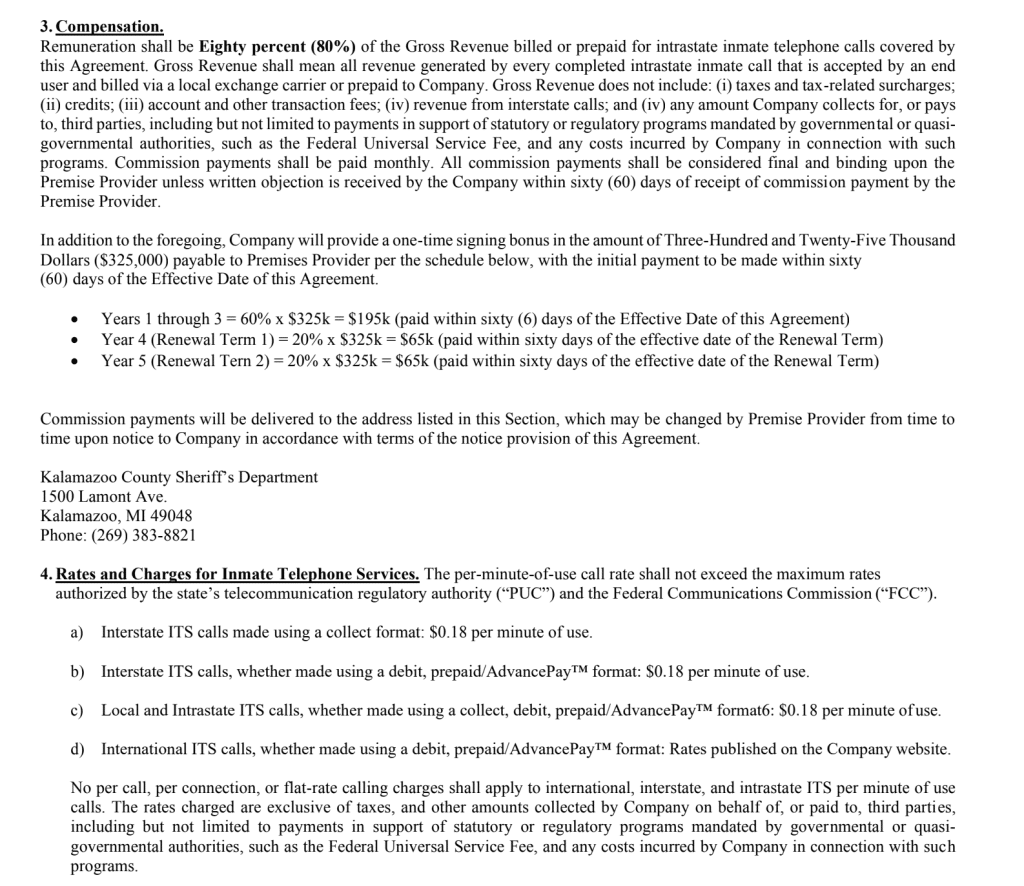
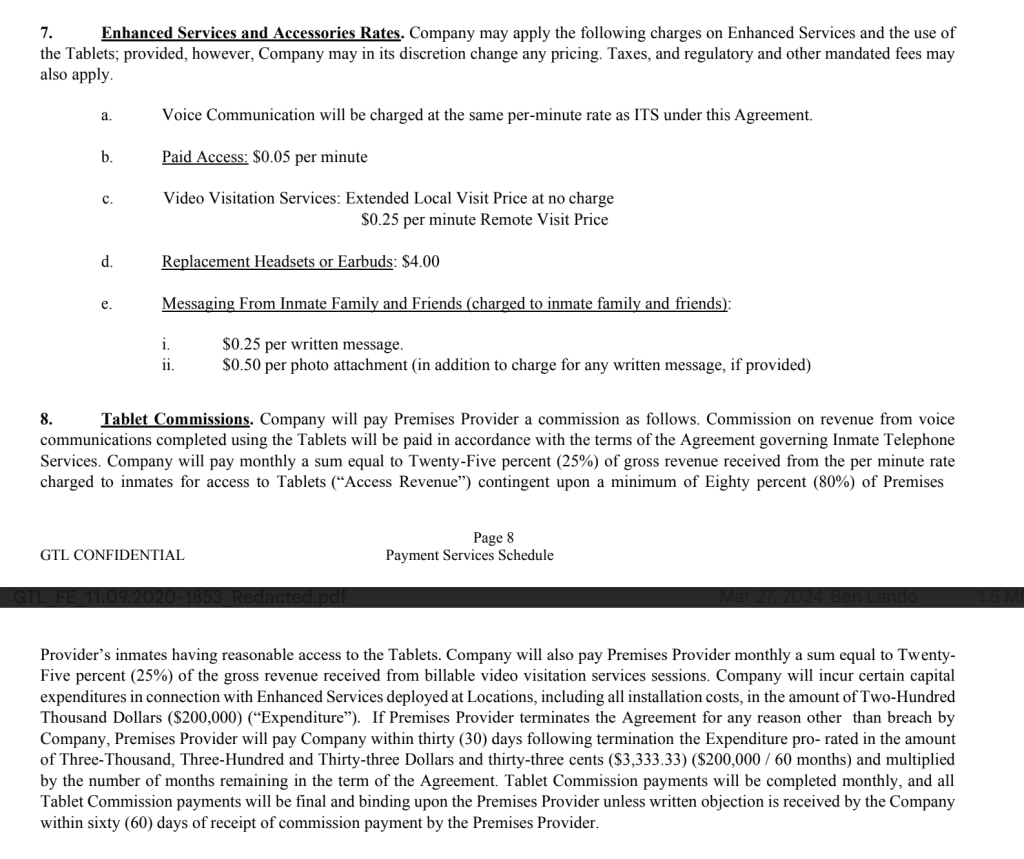
According to Koopman, the $325,000 bonus was paid in 2020 and as of Sept. 10, 2025, the county has received more than $158,000 in commissions:
- 2021 = $11,884.81
- 2022 = $114,077.70
- 2023 = $11,925.22
- 2024 = $9,480.48
- 2025 (YTD) = $10,645.02
Fuller said the money paid out from the signing bonus was spent on body cameras for jail staff. When asked why the 2022 commission was so much higher than other years, Koopman said, “I would defer to the Sheriff’s Office since they manage the contract.” Fuller did not respond to this query by the time of publication.
After paying the percentage of those fees to the county, along with the signing bonus, ViaPath recoups its cost via a myriad of fees. ViaPath charges incarcerated people and their families to open an account. ViaPath charges an additional fee to call a loved one who doesn’t have an account. ViaPath charges a fee to deposit money into an account. ViaPath charges a fee to obtain a refund of any unspent money from an account once it’s closed. And ViaPath doesn’t have to share the revenue generated from these charges with the county.
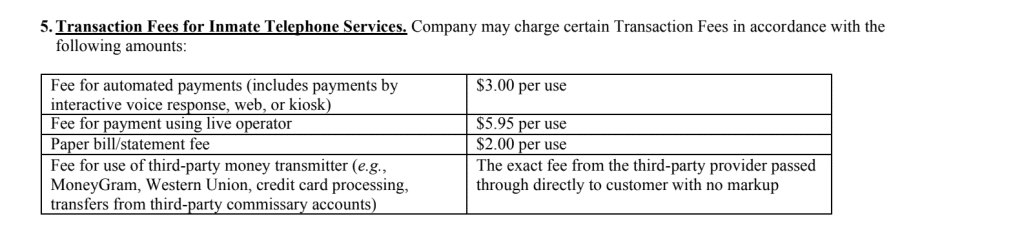
We asked ViaPath why these fees are necessary and what the company’s response is to families who feel that the costly fees are exploitative. ViaPath would not answer that question. When asked how and how much money the company has earned via its contract with Kalamazoo County after paying the county a signing bonus and a monthly commission, a spokesperson wrote, “ViaPath Technologies does not comment on these topics.”
A July 2024 decision by the FCC was meant to put an end date to this practice of high costs and excessive fees, following a decades-long battle. Under the new rules, the cost of a 15-minute phone call would drop to $0.90 from as much as $11.35 in large jails and, in small jails, to $1.35 from $12.10. The new rules also, for the first time, address the exorbitant cost of video visitation calls, dropping those prices to less than a quarter of current prices and requiring per-minute rate options based on consumers’ actual usage. If the FCC ruling is put into effect, in Kalamazoo County, the per-minute rate for a phone call would be capped at 9 cents for phone calls and 14 cents for video calls, Fuller said.
Before 2012, there were no limits on how much prisons and jails could charge for phone calls. The advocacy of Martha Wright-Reed, a grandmother in Washington, D.C., who fought for decades after suffering the high costs to talk to her imprisoned grandson, sparked federal action. In 2013, the FCC capped the rates for out-of-state calls in prisons and jails at 21 and 25 cents, which did not apply to in-state calls. The following year, the commission also banned many of the auxiliary charges, although some are still active.
In 2016, during the final year of the Obama administration, the FCC proposed reducing these rates to about 11 cents per minute for in-state and out-of-state calls. However, the change never took effect. When President Donald Trump took office for his first term in 2017, the FCC indicated it wouldn’t back the lower rates if phone companies challenged them in court – which they did. So, the D.C. Circuit Court sided with the telecommunications companies, keeping the rates as they were. The lead petitioner in the suit was GTL.
The deadline to shift over to new, lower rates was set for April 2025, but with a shift in presidential administrations this year came a new FCC chairman who has extended the deadline to April 2027.
A trail of lawsuits, before and after the Kalamazoo County contract
GTL, now ViaPaith, is no stranger to the courtroom. The company has faced dozens of lawsuits and other legal squabbles over the years, including prior to being awarded its current contract with Kalamazoo County.
It’s unclear whether Kalamazoo County officials uncovered, let alone scrutinized, those accounts. Fuller said the deal was mostly handled by the former undersheriff, essentially the chief operating officer of the department, who has since retired.
GTL is regularly named in lawsuits by people detained in prison and jail, often as a co-defendant alongside jail administrators, government agencies, and high-visibility politicians and bureaucrats. Imprisoned people frequently file the lawsuits pro se and in forma pauperis, meaning they are representing themselves and seek to have the courts waive typical fees and charges needed to sustain a lawsuit. The suits are almost always dismissed as lacking proper evidence, argumentation, or framing.
Several lawsuits by advocates have been more successful, however, and illuminate the jail telecom companies’ pricing practices. In June 2020, attorneys filed a class action lawsuit against GTL, as well as other jail telecom companies, alleging price-fixing — a coordinated effort to charge incarcerated people higher rates. Albert et al. v. Global Tel*Link Corp. et al. accused the telecom companies of violating the Sherman Antitrust Act and the Racketeer Influenced and Corrupt Organizations Act (RICO), the latter often used in organized crime cases. In 2023, a judge revived the case after a district court had dismissed the RICO charges; the Fourth District of the U.S. Court of Appeals reinstated the RICO charges, allowing the suit to proceed. It is still pending.
GTL has also had to defend itself in court from competitors. In 2019, for example, Securus Technologies, Inc. (which also submitted a bid for Kalamazoo County’s jail telecom contract) filed a lawsuit against GTL and the Florida Department of Corrections, alleging that the Florida state agency failed to follow official procurement policies in awarding the contract to GTL. Separately, in 2022, GTL filed a lawsuit against the State of Washington after its department of corrections awarded a contract to Securus.
In 2022, GTL agreed to settle another class action lawsuit that alleged that GTL had for years been improperly seizing money from accounts based on an “inactivity” policy. The Prison Policy Institute, a watchdog and advocate for incarcerated people, estimated that between 2011 and 2019, GTL took more than $121 million from user accounts. GTL agreed to a nearly $67 million settlement in the case, but admitted no wrongdoing.
In November 2023, the Federal Trade Commission (FTC) filed a complaint against GTL over a data breach earlier that year. The FTC cited the company’s responsibility for safeguarding the personal data of incarcerated people using its service. The following February, GTL consented to an FTC order that, while not admitting guilt, required GTL to implement an array of security and monitoring measures, including third-party auditing and progress reports to the government.
In November 2024, the Consumer Financial Protection Bureau (CFPB) ordered ViaPath “and its subsidiaries to pay $3 million in restitution and penalties” for charging penalties and freezing accounts when payment problems occurred, taking money from accounts, and hidden fees, according to Prison Legal News, a legal journal of the Florida-based nonprofit Human Rights Defense Center.
ViaPath declined to comment on any lawsuits or accusations.
New name. Legal challenges continued.
In January 2024, GTL rebranded as ViaPath, “to better reflect its vision and mission,” according to the company’s website.
Four months later, lawsuits were filed in Michigan by families of people held in the county jail against St. Clair and Genesee counties for contracts signed with GTL and Securus Technologies, respectively. They are accused of raising county revenues by banning in-person family visits several years ago and signing higher-fee communication contracts. (The contracts are similar to the one signed by Kalamazoo County, but there is no indication of a relationship with the shutdown of in-person visits, which took place years earlier in Kalamazoo County.)
Both companies denied wrongdoing in those lawsuits, which are ongoing.
The higher value of lower costs
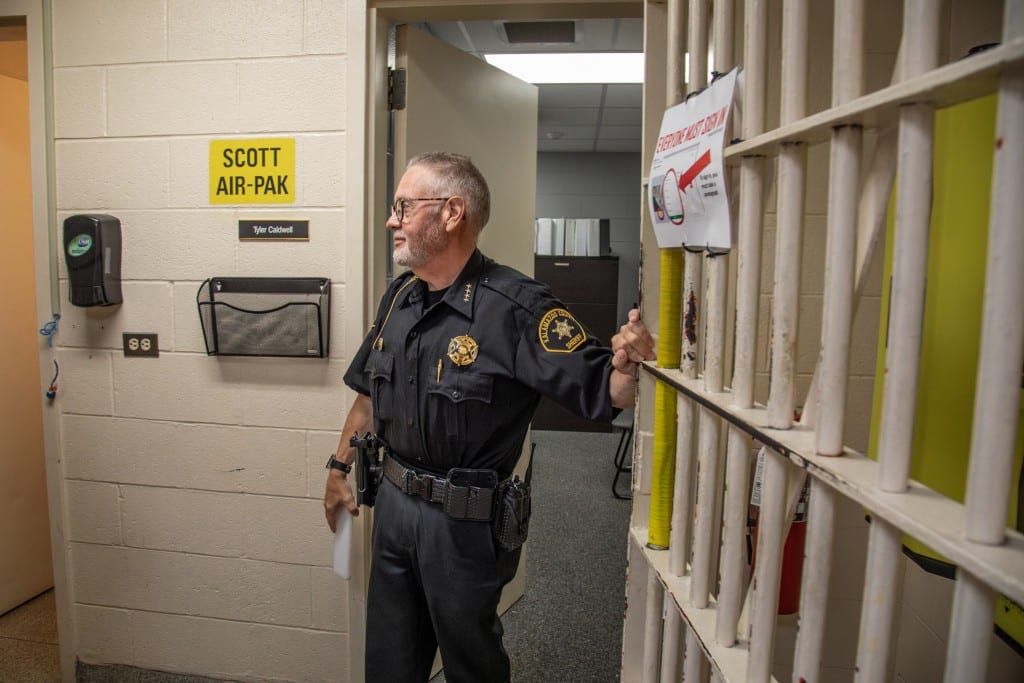
Fuller said that in negotiations with ViaPath, he fought to provide the two free weekly 30-minute visits that are currently in place. “That’s not happening every place else either,” he said. Fuller said regardless of the cost, the budget of the county jail, allocated by county commissioners, is set. “You are not going to see a bump in sheriff office revenues for our operations because we only have whatever the county gives us through the general fund or our millage,” Fuller said, which are the voter-approved property taxes dedicated to county law enforcement and public safety.
While the county receives money in the deal, Fuller claims his facility has “either the lowest (rates) or very close to the lowest, because of our team’s desire to make sure we do everything we can for our residents and their families to keep them in connection.”
But actually, the lowest rate is zero dollars. In 2021, Connecticut became the first state to prohibit prisons from collecting revenue from communication services, protecting visits from being replaced by communication technology. Massachusetts followed its lead. In California, Minnesota, and Colorado, only prison phone calls are free, but there’s still a charge for video calls and electronic messaging.
According to the 19th, a nonprofit news outlet focused especially on the impact of public policies on women in this country, advocates “pointed to research indicating that consistent phone calls and visits during incarceration improves the success of reentry into society after prison and reduces recidivism. They highlighted that incarcerated people might have fewer clashes with each other or with correctional officers if they are able to talk to their loved ones regularly over the phone.”
According to Ruff, lack of human contact can take a toll.
“Any type of institutionalization where you’re distancing people from the opportunity to have face-to-face contact, or touch, or even voice naturally through the air without barriers … over time, I think there becomes an effect, which is detrimental.”
Human interaction has benefits on neurobiological processes and hormonal regulation, said Ruff, including the body’s release of oxytocin, which is important for stress reduction and social bonding. Reduced contact with loved ones would impact these processes.
Ruff has some experience working as a mental health advocate in the jail. Ruff said it was clear that his in-person visits with clients had a positive impact, including an “obvious difference in a person’s demeanor.”
Deere agrees that support is crucial: “If you can see somebody there, like physically instead of just like, over the screen … it’s more encouraging. … (It) lets you know that people are there for you. They’re still there for you.”
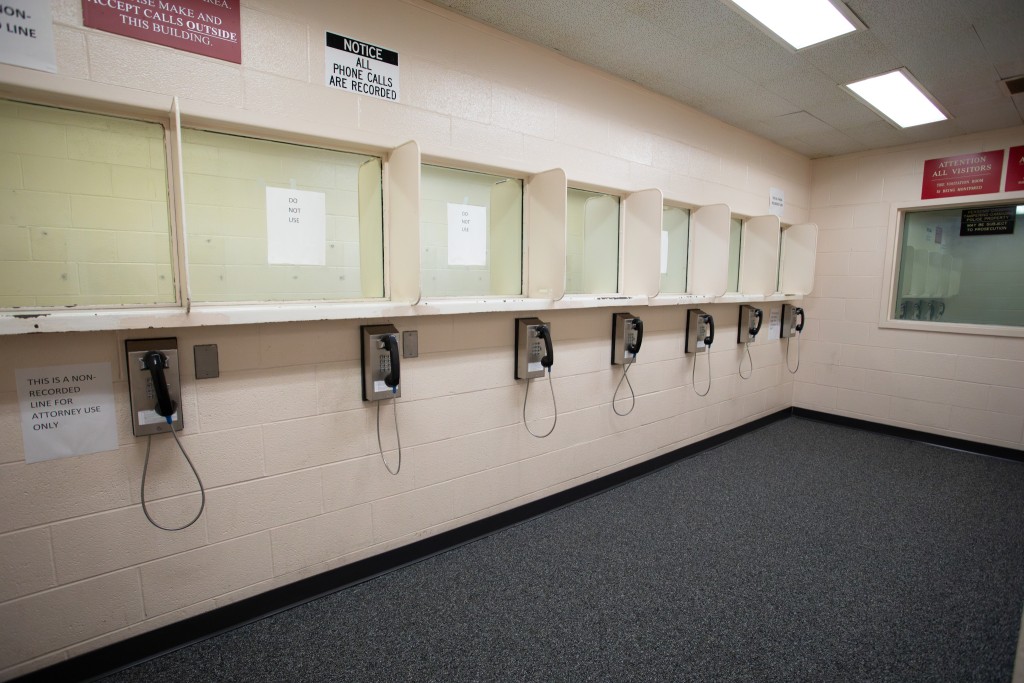
In-person visitation ended at the Kalamazoo County Jail in spring of 2013, upon the completion of a 75,000-square-foot addition to the main jail structure, which added around 90 cells to the existing facility. Prior to this time, visitation happened through a pane of glass, with incarcerated people and family members speaking to each other through telephones on each side. This policy only allowed for two visits per week. Due to spatial constraints in the facility, only six people were able to receive visitors every half-hour, for a maximum of 72 visits a day.
“We found some problems with that visitation method because it was limited to the spaces we had,” said Fuller, adding that there is no need for an in-person method of visitation in addition to the virtual option, as the Kalamazoo County Jail has noted a significant increase in communication between jailed people and their loved ones since switching to virtual visitation.
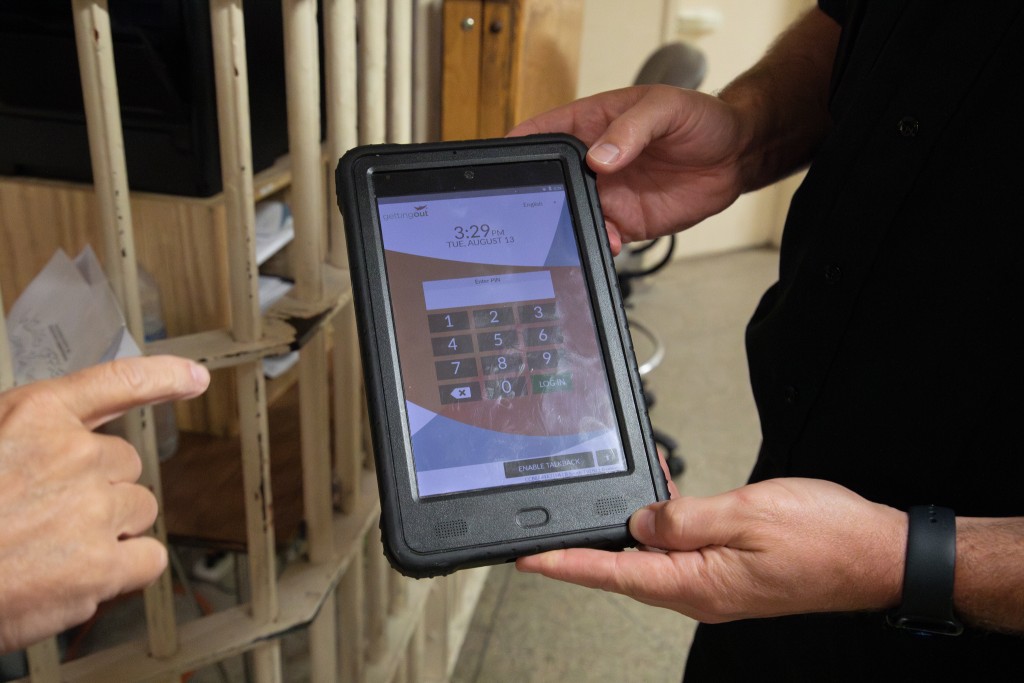
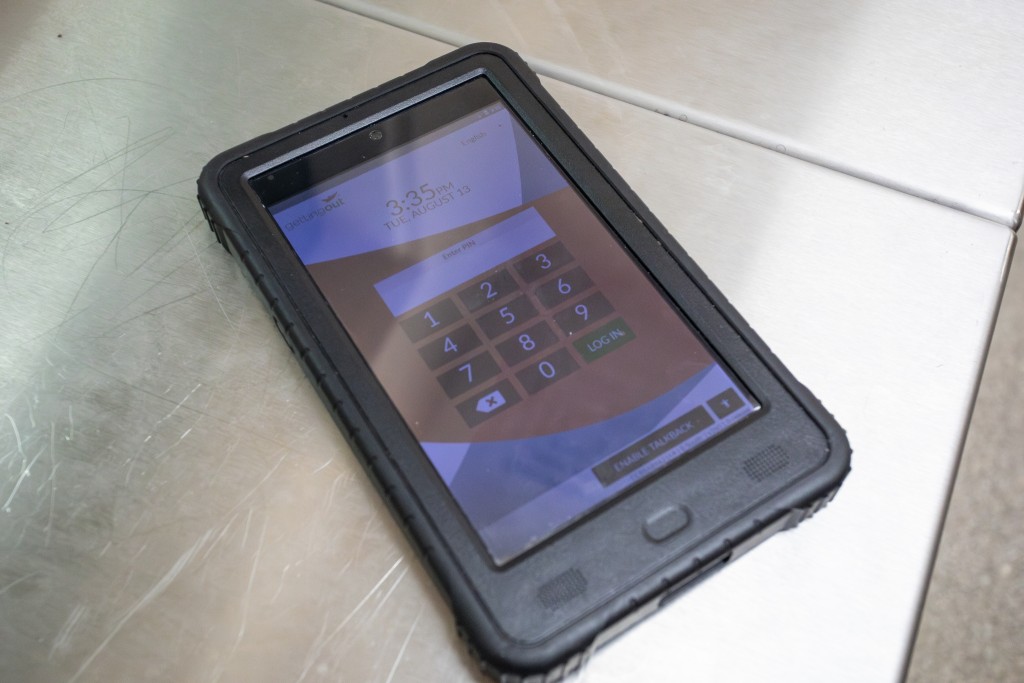
Now, jailed people communicate with their families by phone or video calls using wall-mounted screens or hand-held tablets, located in many of the cells or in visitation rooms outfitted with multiple devices. By special request, Fuller said that jailed people may be allowed an in-person visit with family, but that he can only recall three such occasions when that has taken place in the last decade. Deere said he wasn’t aware of any in-person visitation options. Although incarcerated people can rarely meet face-to-face with family members, they have been able to meet in person with their attorney, both through the glass and in the same room. Visits with attorneys do not count towards one of their two free visits.
While the tablets are meant to increase accessibility, Deere said access can be tough for multiple reasons. First, there’s a matter of working out the schedule with the other men living in the same quarters.
“In a cell block, it’s like four- to eight-man cells and you barely even got enough room to walk around in the cell. … Y’all cramped up in this room all day, 24/7.” And with the tablet being the only connection to the outside world, as well as the only entertainment provider, working out a schedule without creating friction is half the battle. Right now, the jail has about one tablet available for every four men, a ratio Fuller said he is working to narrow.
Visitation hours are from 9 a.m. to 11 p.m., but there’s no guarantee tablets will remain charged for the entire 14 hours. According to Deere, it can be a challenge to keep enough tablets charged because a correctional officer has to do it.
And sometimes when the men finally get a hold of a tablet, “you don’t get good service at times,” Deere said. In the event of a bad connection or poor service, it’s a challenge to get in touch with ViaPath for a refund, according to Deere.

Deere was jailed for nine months after being arrested for a parole violation. He had been incarcerated before, and said this most recent stint he spent behind bars cost him financially and mentally.
“Just thinking of the financial strain put on your people, trying to keep up with you being in there, with them living out here, and helping you in there,” Deere said. “It is hard. It’s hard on everybody that’s connected to you when you’re in a situation like that.” He said other necessities like toiletries and food have also gone up in cost. He said most people don’t have enough money even when they’re out in the world and working.
Deere was released after nine months in jail and the charges were dropped. He’s one of a majority of those held in jails across the country – 70%, according to the Prison Policy Initiative – who are awaiting trial or otherwise have not been sentenced to be there.
Fuller said he supports the FCC ruling to enact rate caps on the jail telecommunication services.
Deere said something as simple as having better – and less expensive – access to loved ones can make a difference, both for incarcerated people and society.
“Even though we made the mistakes that we gotta live with, we gotta deal with the consequences – help us learn,” he said. “Don’t make it as hard as possible where we resent the system. That just leads to more criminal activity.”